
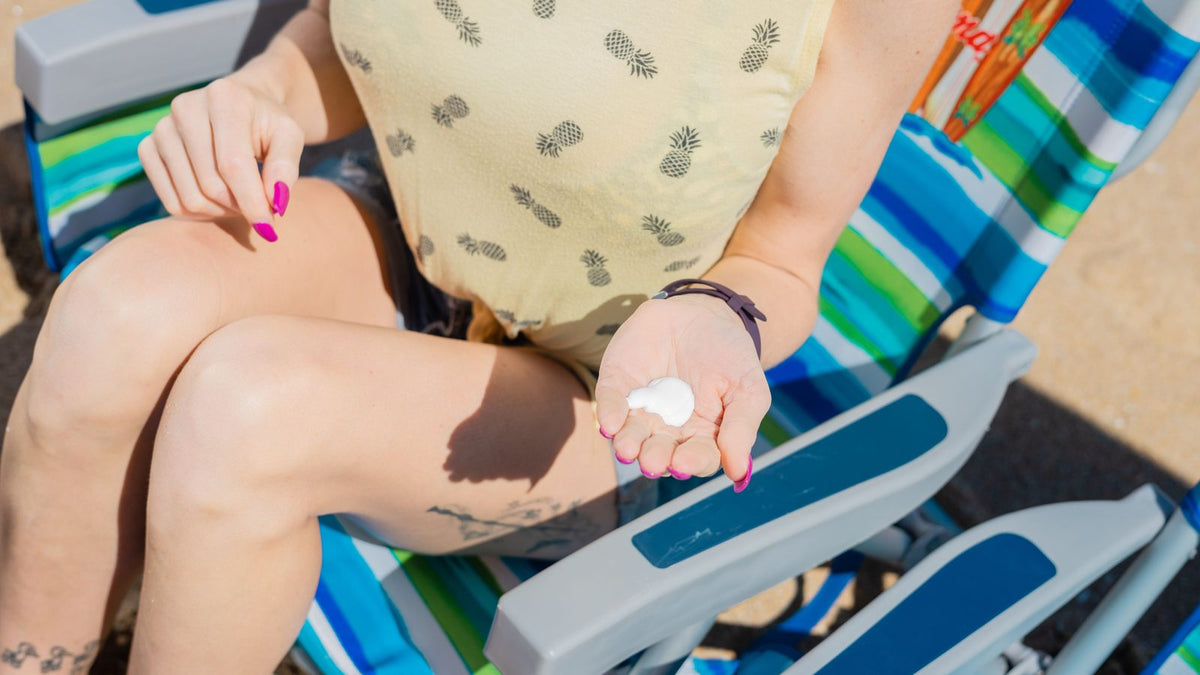
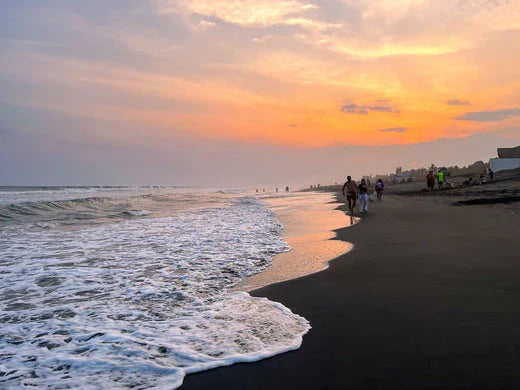
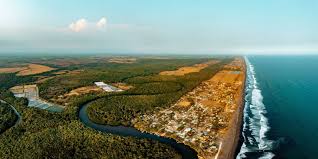
In El Paredón the sun hits differently. The volcanic sand is dark, it soaks up heat, and the glare off the Pacific multiplies the radiation: you can burn in 20 minutes even on a cloudy day. And if you're getting in the water, whatever you put on your skin ends up in the ocean. This guide is what actually works on Guatemala's coast — reef-safe mineral sunscreens, tested for tropical sun and salt water.
Why sunscreen matters more on Guatemala's coast
Three things work against you on Guatemala's Pacific coast: tropical latitude (the sun falls almost straight down between 11am and 2pm), black volcanic sand that holds heat and reflects it, and hours in the water if you're here to surf. A regular chemical sunscreen breaks down fast with sweat and salt. Mineral ones (zinc oxide / titanium dioxide) form a physical barrier, hold up better in water, and contain no oxybenzone or octinoxate — the filters flagged as harmful to reefs.
The reef-safe sunscreens that work here

Thinksport SPF 50+ Mineral Sunscreen (zinc oxide, 6 oz)
A 100% zinc oxide filter, water-resistant. The workhorse for long sessions of sun and salt.
Check price on Amazon →
Stream2Sea SPF 40 Sport Sunscreen in a tin (fragrance-free)
SPF 40 sport in a metal tin: it won't burst in your pack and cuts down on plastic waste.
Check price on Amazon →
Kokua Sun Care natural Hawaiian zinc SPF 50
Non-nano zinc with a short ingredient list; born in Hawaii for strong sun.
Check price on Amazon →
All Good Sport Mineral Sunscreen Lotion (reef safe)
Sport formula: holds up well to water and sweat, a reef-safe mineral filter.
Check price on Amazon →
Blue Lizard mineral sunscreen
Mineral built for reactive skin. The safe pick if chemical filters irritate you.
Check price on Amazon →
Thrive Natural Care SPF 50 (Hawaii 104 reef compliant)
Formulated to Hawaii's reef-compliant standard, SPF 50.
Check price on Amazon →How to use it right at the beach
Apply it 20 minutes BEFORE you head out, not on the sand. Reapply every 2 hours and always after every session in the water. With volcanic sand the glare is intense: don't forget your ears, the tops of your feet, the back of your neck, and behind your knees. If you're going to surf, a stick on your face lasts far longer than lotion. And bring enough: in El Paredón and Monterrico local shop prices for sunscreen run high and the selection is thin — bring it from home.
Frequently Asked Questions
What does it mean for a sunscreen to be reef safe?
It contains no oxybenzone or octinoxate, the chemical filters linked to coral bleaching. Reef-safe sunscreens usually use mineral filters: zinc oxide or titanium dioxide, which form a physical barrier on the skin.
What SPF do I need for Guatemala's coast?
SPF 50 at a minimum if you'll be out for hours. The coast sits in the tropics and the UV index reaches very high levels between 10am and 3pm, even on cloudy days.
Can you find reef-safe sunscreen in El Paredón?
The local selection is limited and pricey: village shops carry basic brands, not always mineral ones. It's best to bring it from home, especially if you need a specific brand.
Does mineral sunscreen leave your skin white?
Traditional mineral formulas do leave a white cast. Formulas with clear zinc or a tint cut it way down — check our section on no-white-cast options.
Keep planning your trip: what El Paredón is, how to get there and where to stay.
As an Amazon Associate, I earn from qualifying purchases. The price you pay does not change.
More travel guides
From the El Paredón blog
Everything you need to know to visit El Paredón: how to get there, where to stay, what ...
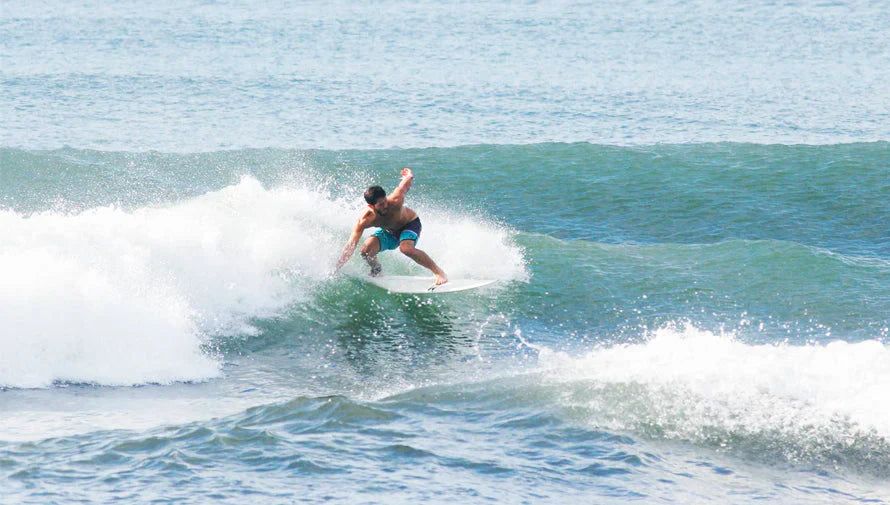
El Paredón is the best surf destination in Guatemala. Waves for all levels, certified s...
The 10 most impressive beaches in Guatemala ranked: surf, nature, atmosphere, and acces...
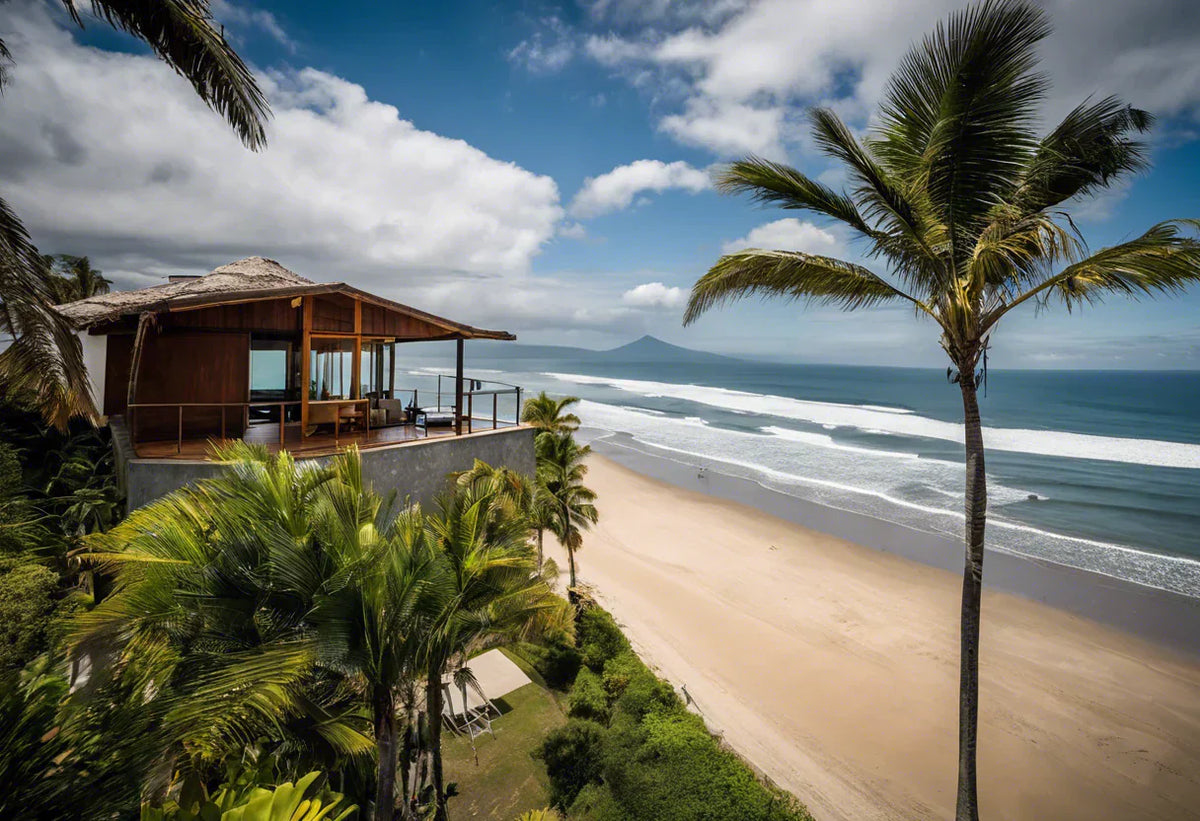
Reasons to choose the Surf House in El Paredón: facilities, accommodation, surf lessons...
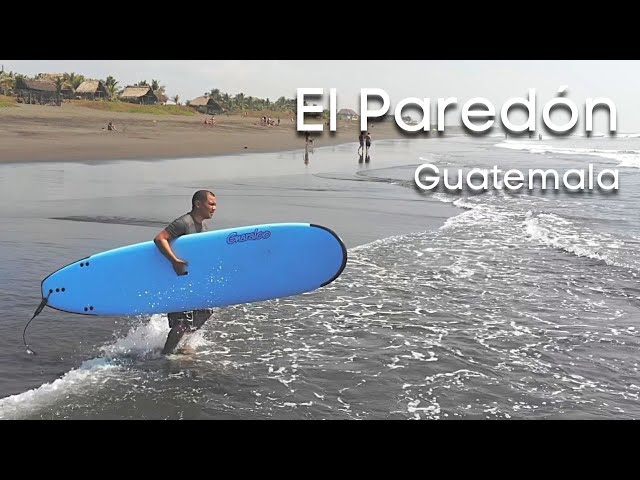
True story of learning to surf in El Paredón, Guatemala: lessons, first waves, wipeouts...
Ecotourism in El Paredón: mangroves, turtle release, migratory birds, and marine conser...